2026年,基础教学部外语教研室联合外语党支部正式开启“行走·讲述·传承”—— Travel Far, Tell China’s Stories, Pass On the Spirit of China 讲好中国故事活动。活动以“踏迹文化阵地,厚植家国情怀,讲好中国故事”为主题,面向全校学生常态化开展研学实践。旨在依托研学之旅,引导学生亲身领略祖国壮美山河、感悟中华深厚文脉,着力打造沉浸式文化浸润与家国情怀育人实践课堂;同时鼓励学生以英语为载体,向世界讲好真实立体的中国故事,赓续中华民族精神血脉。
同学们探访文博场馆、分享历史文化、介绍山河风貌,用英语讲述鲜活生动的中国故事,在行走体验与对外表达中厚植民族底气、提升文化自信。本期研学分享,让我们跟随电信研25-2班邓超平同学的脚步,走进南京博物院,在宏阔屋宇与静默器物之间回望江苏文明的漫长足迹,感受考古发现、艺术创造与当代生活的相互连接,思考新时代青年应当如何理解、保护并讲述中华优秀传统文化。
Hello everyone! I am Chaoping Deng from the Telecommunications Graduate Class 25-2. Inspired by the school’s “Walk, Tell, and Inherit” activity, I visited Nanjing Museum. Rather than viewing the museum as a collection of isolated treasures, I tried to understand how its architecture, artifacts and exhibition spaces connect the long history of Jiangsu with the lives of people today. Today, I would like to share this journey in both Chinese and English.
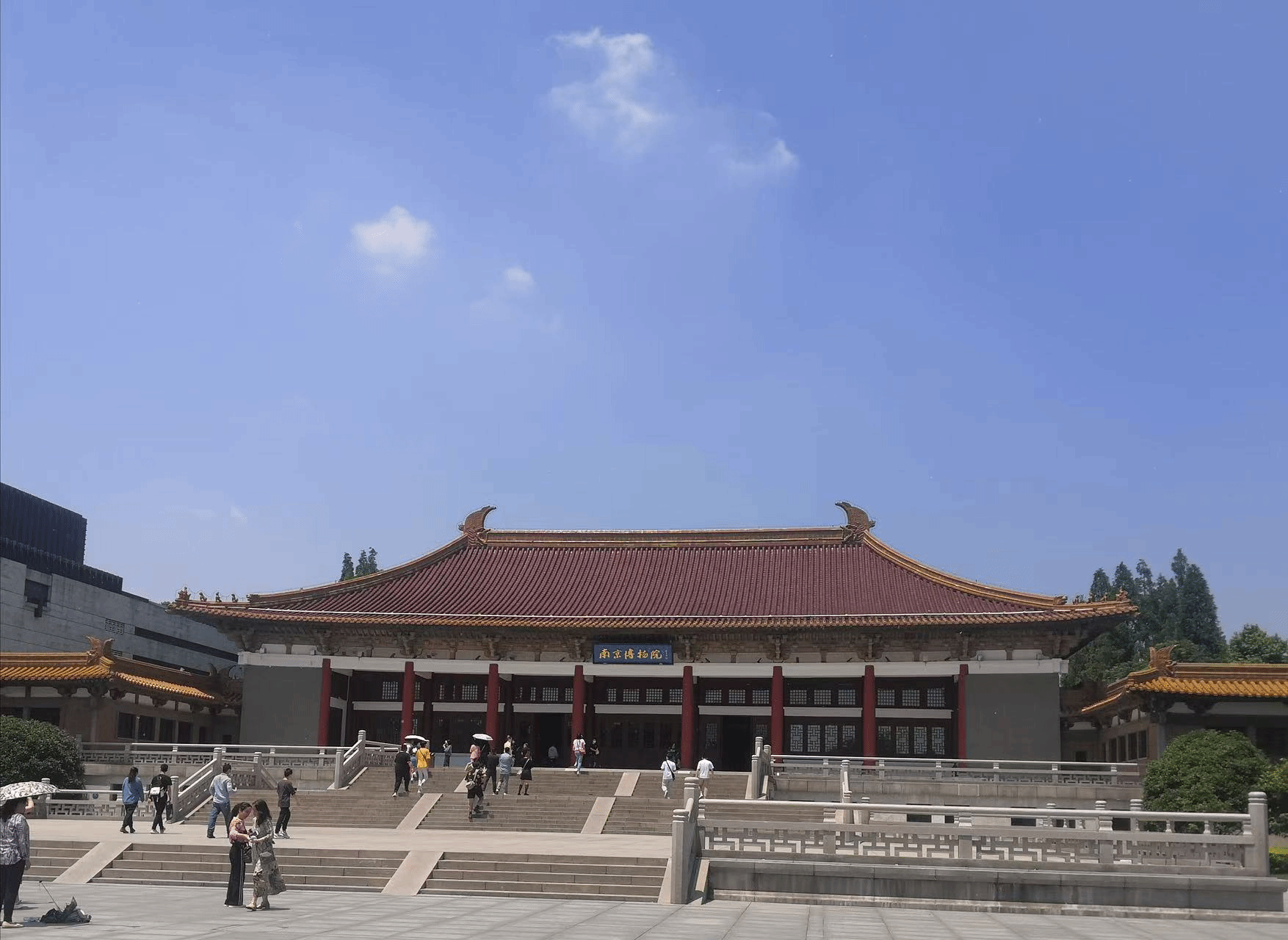
图1 南京博物院历史馆外景
Part 1: A Palace of Memory
屋宇之间,文明开卷
走进南京博物院,首先映入眼帘的是恢宏庄重的主馆建筑。棕色琉璃瓦在阳光下泛着温润的光,层层屋檐向两侧延伸,红柱、斗拱与宽阔台阶共同构成沉静而宏阔的空间。门额上的“南京博物院”五个金字格外醒目。站在广场上仰望,我领略到的不只是一座展馆的恢宏气势,更像是一本关于文明的厚重史书在眼前缓缓展开。
As I approached Nanjing Museum, the first thing that caught my eye was its dignified main building. Brown glazed tiles shone softly in the sunlight, while the broad roof, red columns and wide steps created a calm and impressive space. The golden characters reading “Nanjing Museum” stood prominently above the entrance. Looking up from the square, I felt that I was not merely facing an exhibition hall, but watching a long scroll of civilization unfold before me.
南京博物院于1933年筹建,前身为国立中央博物院筹备处,是我国第一座国家投资兴建的大型综合类博物馆。主馆将传统宫殿式外观与现代博物馆功能完美融合。它提醒我,文化传承并不是简单复制过去,而是在尊重传统的基础上,让旧的智慧进入新的公共空间,使更多人能够平等地接近历史、理解历史。
Nanjing Museum was founded in 1933, with the Preparatory Office of the National Central Museum as its predecessor. It was the first large comprehensive museum in China built with state investment. Its main building combines the appearance of traditional palace architecture with the functions of a modern museum. It reminded me that cultural inheritance is not a simple reproduction of the past. It means respecting tradition while allowing old wisdom to enter new public spaces, where more people can approach and understand history.
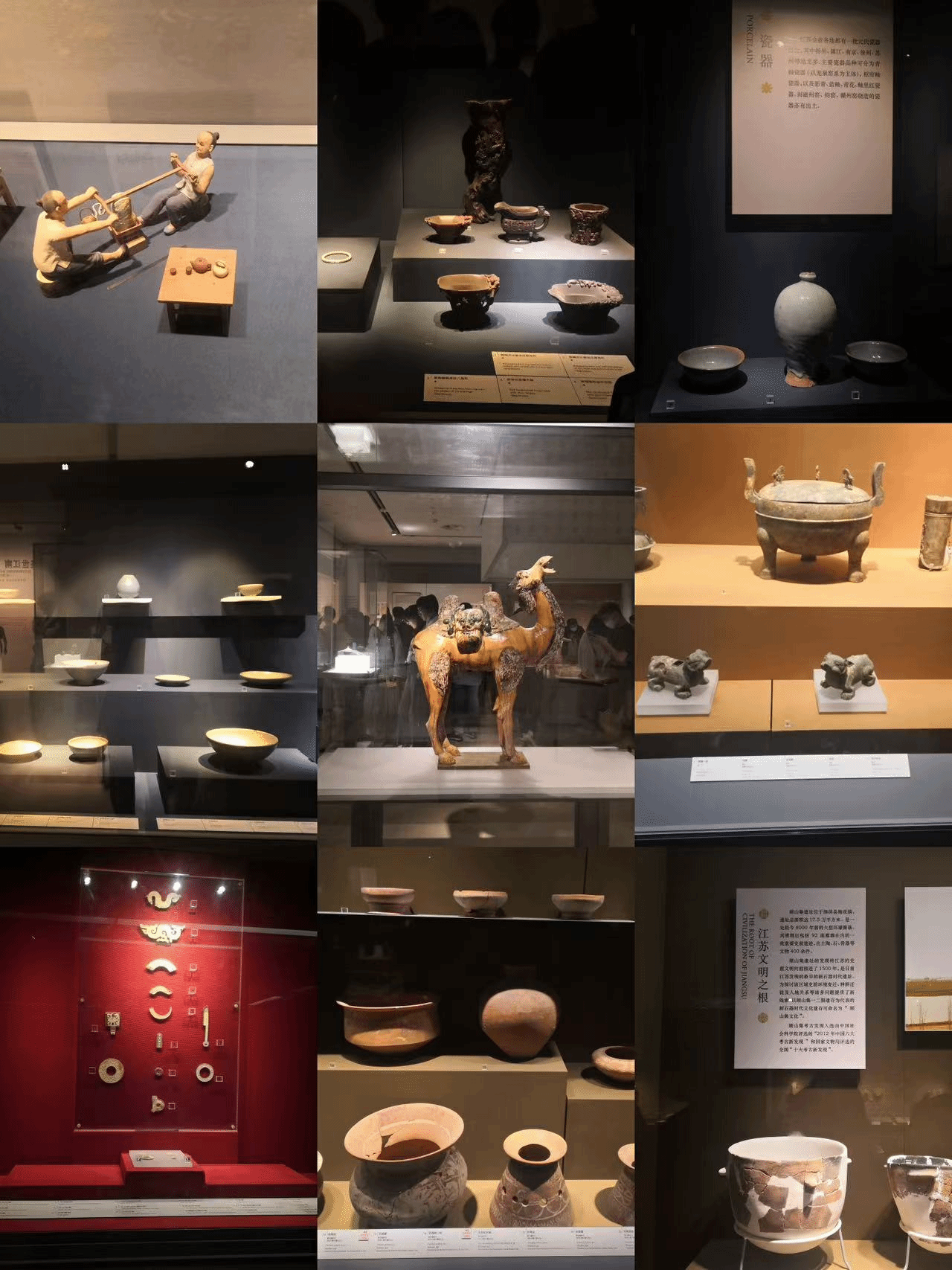
图2 南京博物院馆内展陈:陶瓷、青铜器、彩绘骆驼俑及考古器物
Part 2: Reading History Through Objects
器物无言,岁月有声
走入展厅,光线渐暗,文物在展柜中安静地陈列。青瓷瓶、陶碗、青铜礼器、彩绘骆驼俑以及形态各异的生活器皿,跨越不同年代汇聚在同一条参观动线上。它们没有声音,却保存着古人的手艺、审美与生活经验:器物的弧度凝聚着制作者对材料的驾驭,纹饰和造型透露了当时的礼仪观念,杯盘壶罐则把历史拉回普通人的饮食起居。
Inside the galleries, the light became softer and the artifacts appeared quietly behind the glass. Celadon vessels, pottery bowls, bronze ritual objects, a painted camel figure and many forms of everyday utensils from different periods were brought together along the exhibition route. They were silent, yet they preserved the skills, aesthetics and daily experience of people from the past. The curve of a vessel revealed a craftsperson’s understanding of material; patterns and forms reflected ideas of ritual; cups, plates and jars brought history back to the ordinary routines of eating and living.
参观时,我逐渐发现,博物馆真正珍贵的地方并不只在于“观赏宝物”,更在于理解文物为何出现、由谁使用、经历了怎样的流转与保存。展柜中的修复痕迹并没有削弱器物的美,反而让时间变得可见。破损、拼接与残缺告诉我们,文明从来不是毫无裂缝地抵达今天,而是在一代代人的发现、研究与保护中,逐渐被重新认识。文物保护者的工作,便是连接过去与未来的重要桥梁。
During the visit, I gradually realized that the true value of a museum lies not only in seeing “treasures,” but in understanding why an object was made, who used it, and how it survived to the present. Traces of restoration did not reduce the beauty of the artifacts; instead, they made time visible. Cracks, repaired sections and missing parts showed that civilization did not reach us without interruption. It has been rediscovered through excavation, research and conservation. The work of museum professionals therefore forms an essential bridge between the past and the future.
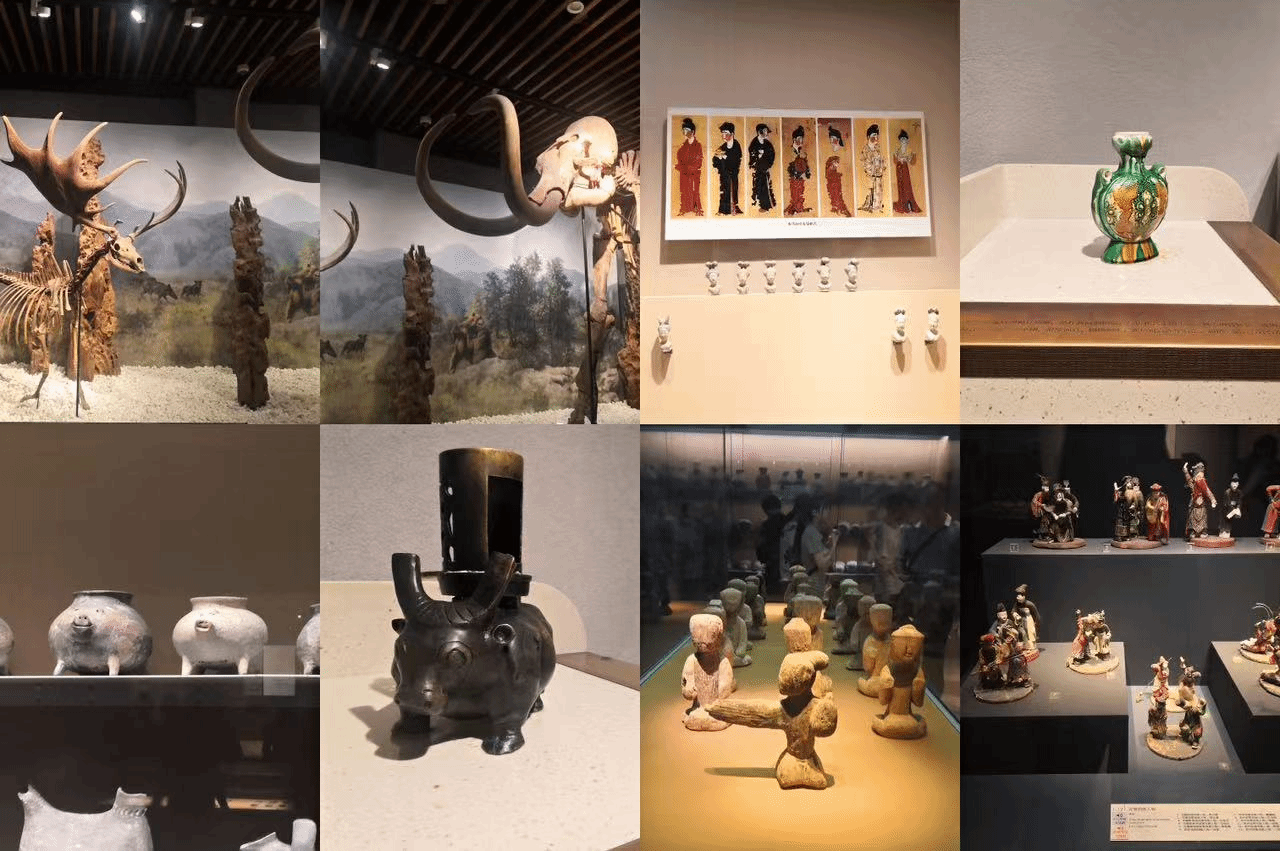
图3 南京博物院主馆及自然标本、陶器、人物俑与民俗展陈
Part 3: From Nature to Living Traditions
从万物生长到人间百态
南京博物院形成了历史馆、特展馆、艺术馆、数字馆、民国馆和非遗馆的“一院六馆”格局。沿着展线继续前行,我看到了动物骨骼标本、陶器、人物俑和民间工艺等不同类型的展品。自然演化、社会生活、审美创造与民俗记忆在同一座博物院中彼此交织,使历史不再只是帝王将相与重大事件的排列,也包括自然的变迁、普通人的劳动以及代代相传的生活方式。
Nanjing Museum follows a “one museum, six halls” structure, including the History Hall, Special Exhibition Hall, Art Hall, Digital Hall, Republic of China Hall and Intangible Cultural Heritage Hall. As I continued through the museum, I encountered animal skeleton specimens, pottery, human figures and folk crafts. Natural evolution, social life, artistic creation and folk memory responded to one another within the same institution. History was no longer merely a sequence of rulers and major events; it also included environmental change, ordinary labor and ways of life passed from one generation to the next.
这次行走也让我重新思考“讲好中国故事”的含义。讲述不是把文物包装成夸张的传奇,而是尊重事实,从一件器物的材质、用途和时代背景出发,理解它与人的关系,再用清晰、生动的语言让更多人听懂。作为新时代青年,我们既要有面对悠久文明的自豪,也要有认真求证、理性表达的责任。只有真实的故事,才能跨越语言和文化差异,获得持久的理解与共鸣。
This visit also made me reconsider what it means to tell China’s stories well. Storytelling should not turn artifacts into exaggerated legends. It should respect evidence, begin with an object’s material, function and historical context, explore its relationship with people, and then communicate that understanding in clear and vivid language. As young people today, we should feel pride in a long civilization while also accepting the responsibility to verify facts and speak with care. Only truthful stories can cross linguistic and cultural differences and create lasting understanding.
Conclusion
结语
这次南京博物院之行,是一次从器物走向文明、从观看走向共鸣的文化学习。主馆建筑述说着现代博物馆事业的历史起点,陶瓷与青铜器彰显着古人的创造力,多样的展陈则让我理解中华文明由无数地区、群体与生活经验共同构成。博物馆并不是把过去封存在玻璃柜中,而是通过研究、保护和讲述,让历史持续参与今天的生活。
This journey through Nanjing Museum was a cultural lesson that moved from objects to civilization and from observation to understanding. The main building revealed the historical beginnings of modern museum development in China; ceramics and bronze objects showed the creativity of earlier generations; and the diverse exhibitions helped me understand that Chinese civilization has been shaped by countless regions, communities and everyday experiences. A museum does not seal the past inside glass cases. Through research, conservation and storytelling, it allows history to remain part of life today.
用脚步贴近文物,用目光读懂历史,用语言讲述中国。愿我们在每一次行走中积累真实的感受,在每一次讲述中保持对文化的敬意,让中华文明的故事被更多人看见、听见并理解。
Let us approach cultural heritage with our steps, read history with attentive eyes, and tell China’s stories with our words.
指导教师:李莹
图文:邓超平
编辑:肖春娇
初审:李莹
复审:刘玲玲
终审:唐艺军 万君