2026年,基础教学部外语教研室联合外语党支部正式开启“行走· 讲述· 传承”——Travel Far, Tell China's Stories, Pass On the Spirit of China 讲好中国故事活动。活动以"踏迹文化阵地,厚植家国情怀,讲好中国故事"为主题,面向全校学生常态化开展研学实践,旨在依托研学之旅,引导学生亲身领略祖国壮美山河、感悟中华深厚文脉,着力打造沉浸式文化浸润与家国情怀育人实践课堂;同时鼓励学生以英语为载体,向世界讲好真实立体的中国故事,赓续传承中华民族精神血脉。
同学们探访文博场馆、分享历史文化、介绍家乡风貌,用英语讲述鲜活生动的中国故事,在行走体验与对外表达中厚植民族底气、提升文化自信。本期推文分享的是电信研25-4班王俊杰同学的辽宁省博物馆之旅,他带领我们驻足辽宁省博物馆凝望千年国宝,探寻华夏文明的深厚底蕴与艺术之美,在岁月遗存中心生敬畏、积淀学识。
Hello everyone! I'm Junjie Wang from the Telecommunications Postgraduate Class 25-4. Inspired by the school activity "Walk, Tell, Inherit," and with the encouragement of my English teacher Ms. Li, I embarked on a meaningful journey to the Liaoning Provincial Museum. It's my great pleasure to share this special experience with you in English today. I will take you to explore five magnificent national treasures and appreciate the profound beauty of Chinese civilization. Let's feel the power of cultural inheritance together.
Part 1 The Treasures of History
历史珍宝
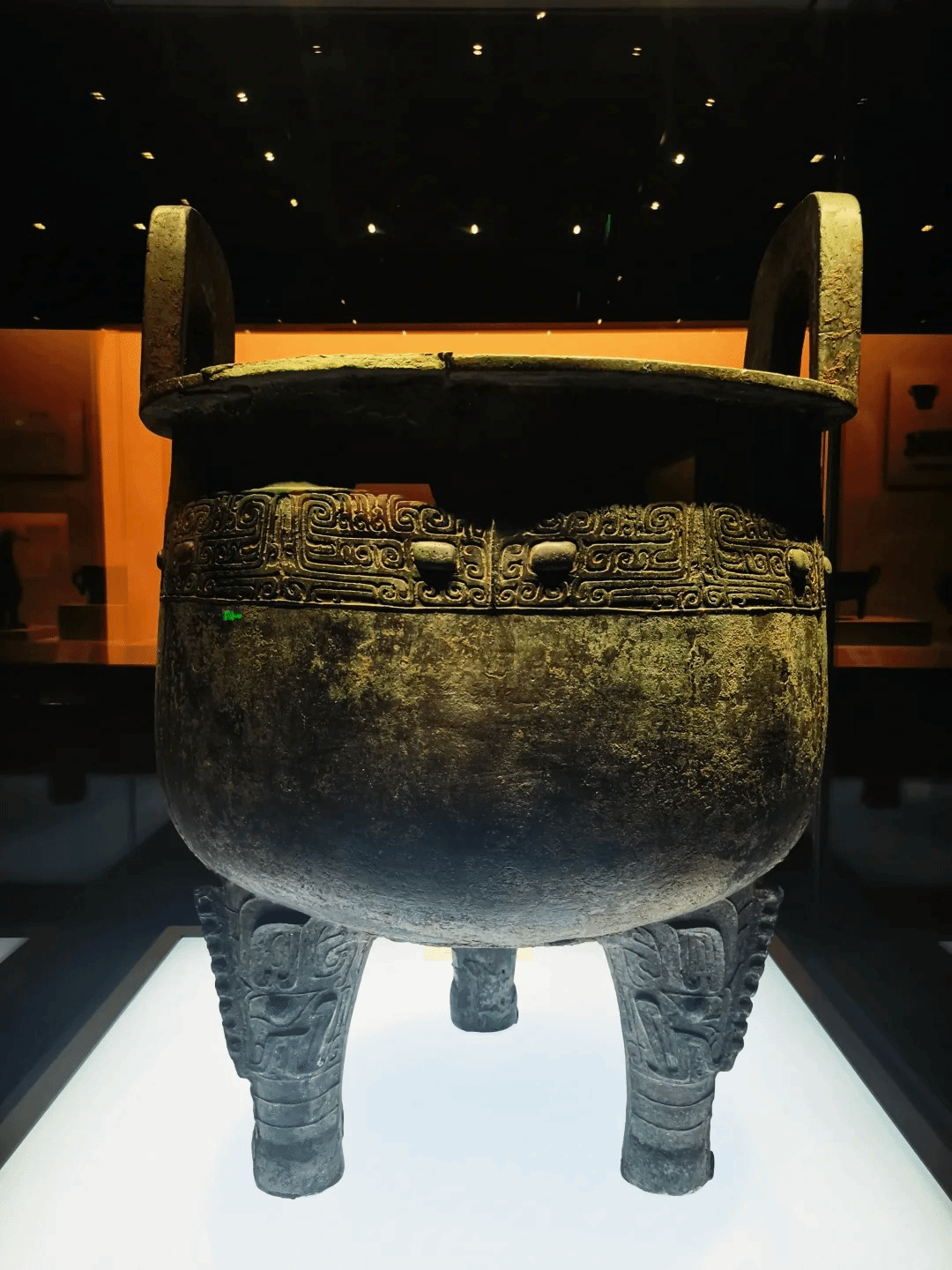
走进辽宁省博物馆古代辽宁展厅,首先映入眼帘的是商代晚期的饕餮纹大圆鼎。这件青铜重器通高86厘米,口径61厘米,重达百余斤,1973年出土于辽宁省朝阳市喀左县小波汰沟。它是迄今为止商王畿之外发现的最大铜鼎,也是国内出土最大的商代圆鼎之一,铸造时间比后母戊鼎还要早约两百年。鼎身直耳深腹,柱足中空,纹饰为单层饕餮纹,面目夸张狰狞,兼具祭祀通神与戒贪教化的双重文化寓意。这件大鼎见证了三千多年前商朝势力已远及辽西,是中原文明与北方地域文化交汇的铁证。
Upon entering the Ancient Liaoning exhibition hall, the first thing that catches the eye is the Large Round Tripod with Taotie Pattern from the late Shang Dynasty (c. 1300–1046 BC). Standing 86 cm tall with a diameter of 61 cm and weighing over 50 kilograms, it was unearthed in 1973 at Xiaobotagou, Harqin Left Wing, Chaoyang City, Liaoning Province. It is the largest bronze tripod ever found outside the Shang royal domain and one of the largest Shang round tripods in China — cast roughly 200 years earlier than the famous Houmuwu Tripod. The taotie (ogre-mask) motif, with its fierce and exaggerated facial features, served dual purposes: connecting with the divine in ritual ceremonies and warning people against greed. This magnificent vessel bears witness to the reach of Shang civilization extending into what is now Northeast China over three millennia ago.
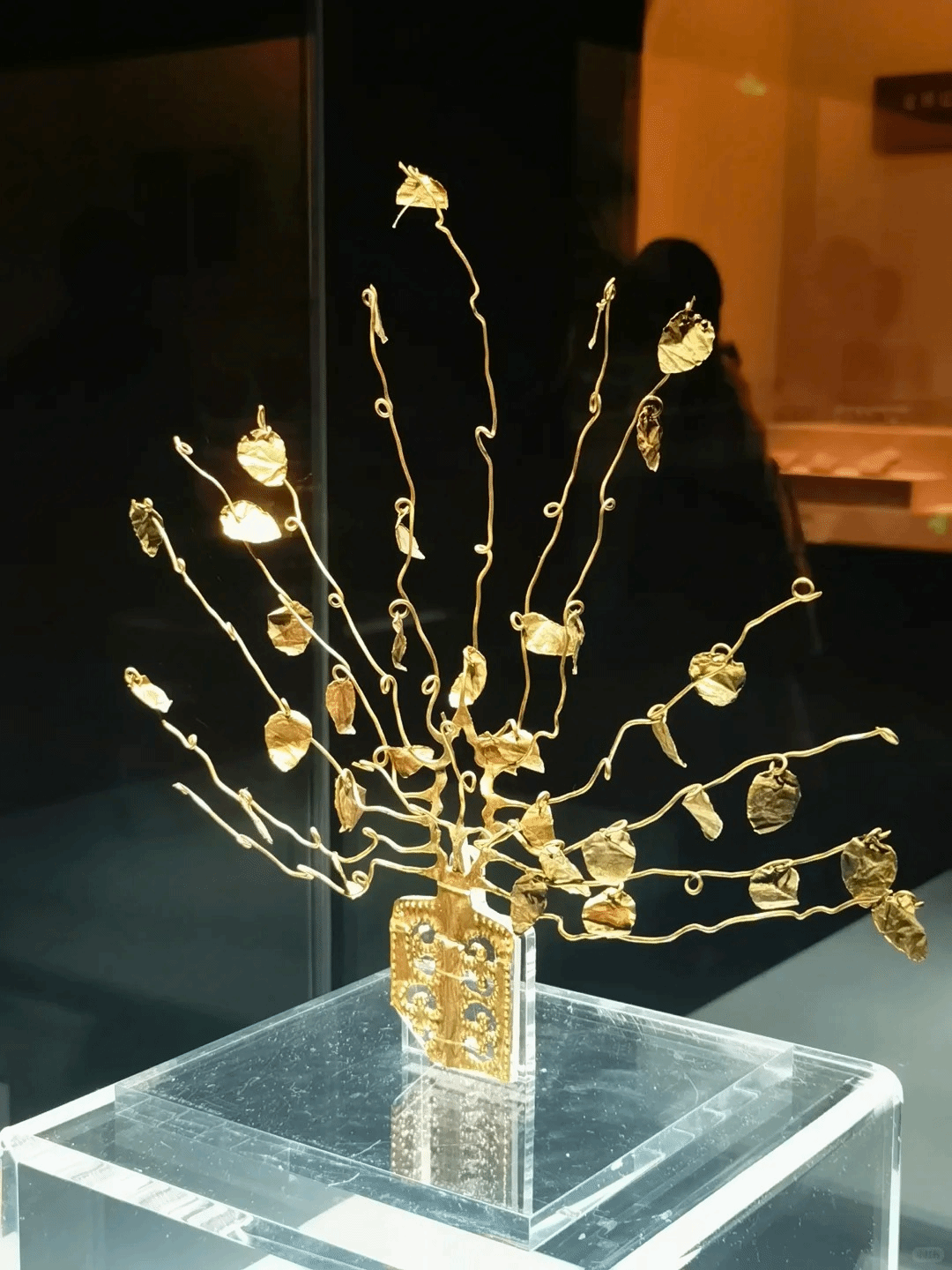
与青铜重器的雄浑形成鲜明对比的,是这件华美精巧的晋代花树状金步摇。1957年出土于辽宁北票房身村,高约27厘米,含金量高达85%—92%。它以金丝弯成花树枝干,上缀桃形金叶,叶片极薄仅0.04厘米,稍有晃动便摇曳作响。金步摇是慕容鲜卑极具代表性的冠饰,不同于中原妇女的垂珠步摇,鲜卑步摇男女皆可佩戴,是身份地位的象征。据《晋书》记载,慕容姓氏的由来便与步摇冠有关——其先祖莫护跋见燕代少年多戴步摇冠而心生喜爱,遂"敛发袭冠",部落因称"步摇",音讹而成"慕容"。这件步摇见证了草原丝绸之路的繁荣,是东亚与中西亚文化交融的珍贵物证。
In striking contrast to the massive bronze tripod stands this exquisite Gold Hairpin with Flower-Tree Design from the Jin Dynasty (Former Yan period, 4th century AD). Unearthed in 1957 at Fangshen Village, Beipiao, Liaoning, it measures about 27 cm in height with a gold purity of 85%–92%. Delicate branches crafted from gold wire support paper-thin peach-shaped gold leaves (only 0.04 cm thick), which tremble and produce a gentle rustling sound with every movement. This hairpin, known as "buyao" (step-sway), was a signature ornament of the Murong Xianbei nobility. Unlike the pendant-style buyao worn by Central Plains women, the Xianbei version could be worn by both men and women as a symbol of status. According to the Book of Jin, the surname "Murong" itself may derive from the Xianbei word for buyao. This artifact is a precious testament to the prosperity of the Grassland Silk Road and the fusion of East Asian, Central Asian, and West Asian cultures.
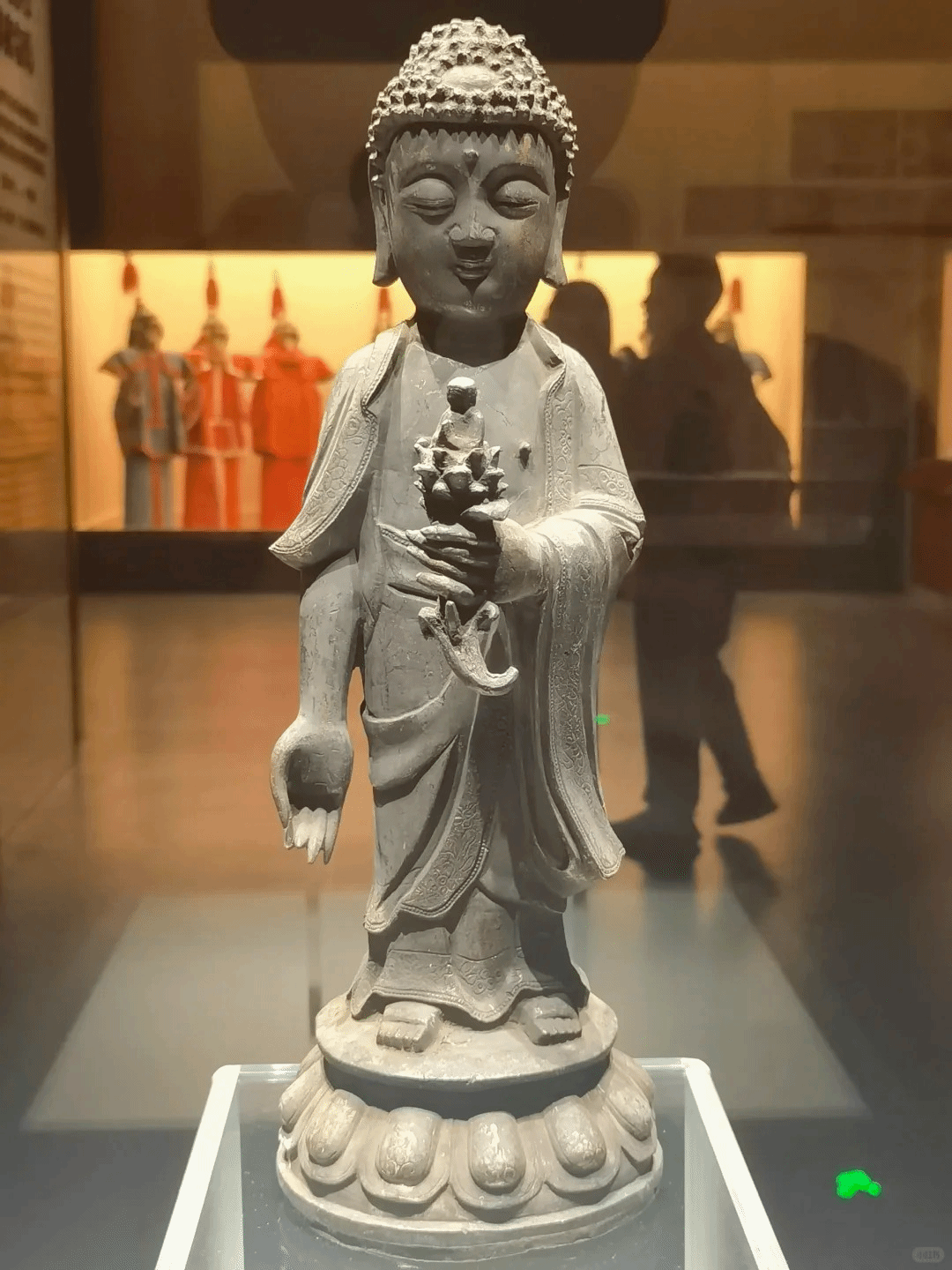
步入中国古代佛教造像展厅,这尊明代铜鎏金接引佛(阿弥陀佛)像静静伫立。阿弥陀佛俗称"接引佛",据《无量寿经》记载,凡至心发愿往生西方极乐世界者,临终时阿弥陀佛必亲自前来接引。造像螺发高髻,宽额丰颐,双目微垂,神态安详慈悲;左手结禅定印,右手自然下垂作接引状,跣足立于仰莲座上。铜胎鎏金工艺精湛,历经数百年金层光泽犹存,体现了明代金铜佛造像的卓越技艺。佛身衣纹流畅如水,将汉地佛教造像的写实传统与宗教的庄严神圣完美融合。
Stepping into the Ancient Chinese Buddhist Sculpture Gallery, one encounters this solemn Ming Dynasty (1368–1644) Gilt-Bronze Statue of Amitabha Buddha, also known as Jieyin Fo (the "Guiding Buddha"). According to the Sutra of Infinite Life, Amitabha personally appears before those who sincerely aspire to be reborn in the Western Pure Land, guiding them at the moment of death. The statue features spiral curls, a high ushnisha, a broad forehead, full cheeks, and downcast eyes radiating serenity and compassion. The left hand rests in the meditation gesture (dhyana mudra) while the right hand extends downward in the welcoming gesture, bare feet standing upon an upturned lotus pedestal. The fire-gilding technique applied over a bronze core retains its lustrous golden sheen after centuries, demonstrating the extraordinary craftsmanship of Ming Buddhist metalwork.
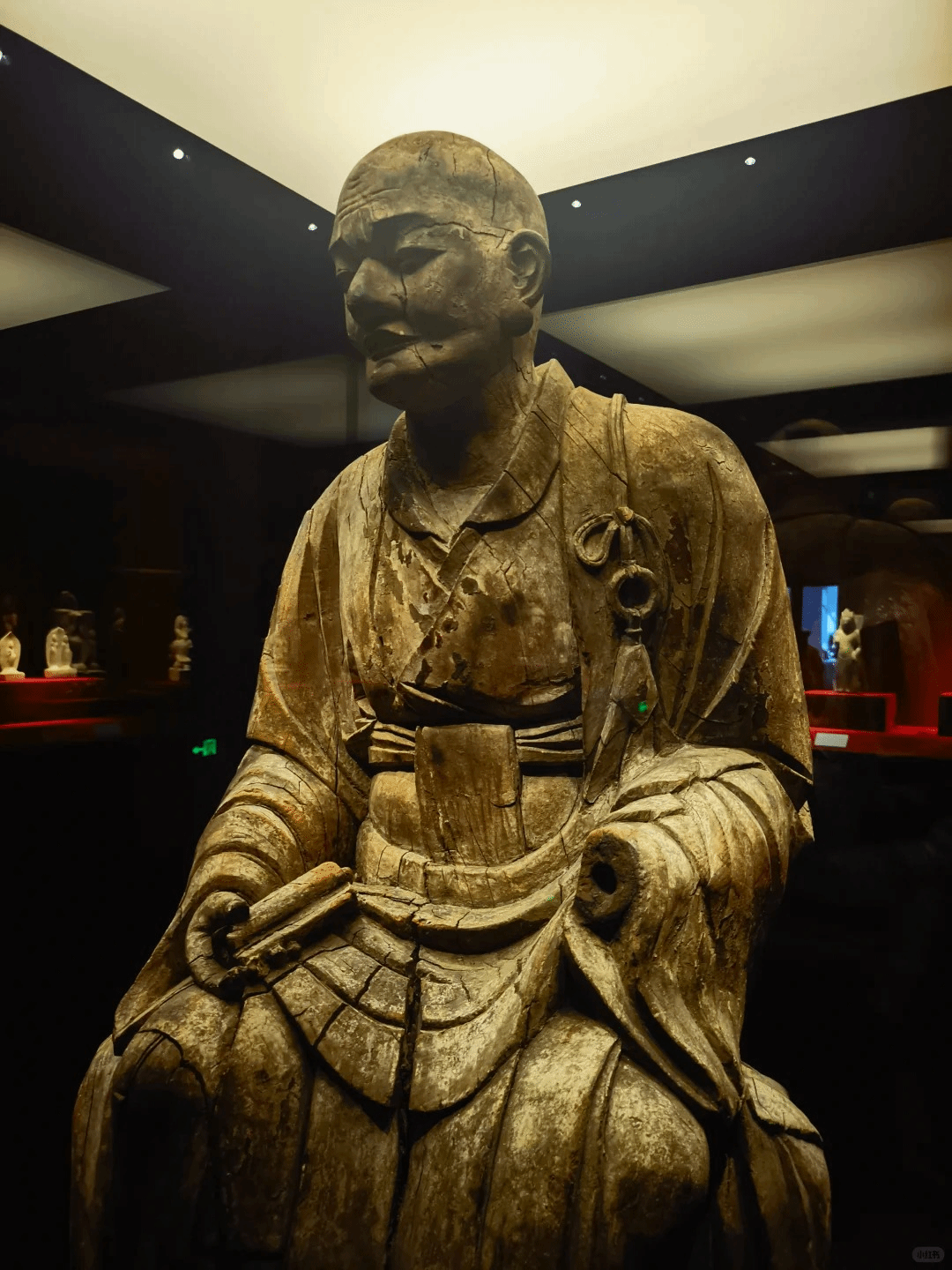
展厅中这尊明代木雕罗汉像,以质朴的木胎承载了六百余年的岁月。罗汉是"阿罗汉"之简称,指断尽烦恼、解脱生死轮回的觉悟者。不同于佛像的庄严法相,罗汉造型取自现实僧人的形象——光头无肉髻,身披袈裟,面容各异,或沉思冥想、或笑对人间,是佛教造像中最富有个性张力的题材。造像由整木雕刻而成,刀法洗练,衣纹褶皱自然垂落,面部刻画尤为传神:眉头微蹙似在参悟佛法,嘴角一抹浅笑却尽显慈悲。明代木雕以木质温润、线条流畅著称,此像正是明代汉地佛造像世俗化、写实化艺术潮流的典型代表。
This Ming Dynasty Wooden Arhat Statue carries more than six centuries of history in its humble wooden form. "Arhat" (Sanskrit: Arhat) refers to one who has extinguished all defilements and attained liberation from the cycle of birth and death. Unlike the idealized majesty of Buddha images, arhats are modeled after real monks — bald-headed without an ushnisha, draped in monastic robes, each with distinctive, highly individualized features, making them the most expressively diverse subject in Buddhist sculpture. Carved from a single block of wood, this statue displays fluid cutting techniques and naturalistic drapery folds. The facial expression is particularly captivating: slightly furrowed brows as if deep in contemplation of the Dharma, yet the faint smile on the lips radiates profound compassion. Ming woodcarving is celebrated for its warm texture and flowing lines, and this arhat exemplifies the period's artistic trend toward secularization and realism in Chinese Buddhist art.
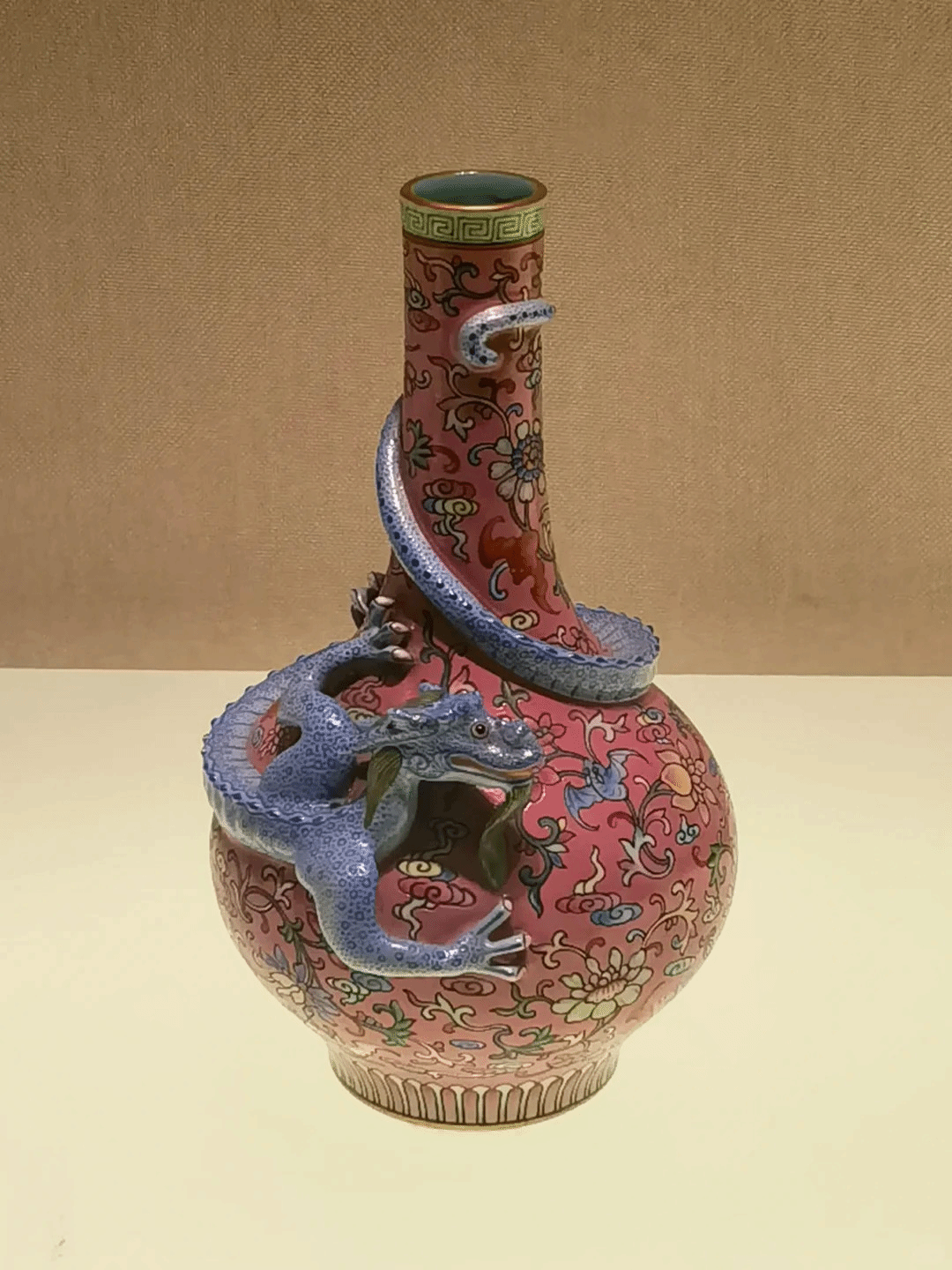
最后这件清嘉庆粉彩堆贴螭龙纹瓶,将展览的华贵之气推向高潮。此瓶直口长颈、溜肩鼓腹、圈足外撇,外壁施胭脂红地釉,娇而不艳;颈部至腹部以堆贴技法塑造一条青花蓝彩螭龙,龙首高举离壁,双目圆睁,上肢粗壮有力,三爪紧贴瓶身,尾部遒劲勾起,龙须施绿彩,蓝绿相映、栩栩如生。瓶身满绘云蝠纹与缠枝莲纹,寓意"福从天降""富贵绵延",口沿与足部饰金彩回纹与莲瓣纹。瓶底落矾红篆书六字款:“大清嘉庆年制”。嘉庆朝仅25年,官窑瓷器传世稀少,此瓶将粉彩绘画与堆塑高浮雕结合,工艺繁复精湛,是嘉庆御窑不可多得的精品之作。
The final treasure is this Famille Rose Vase with Appliqué Chilong (Hornless Dragon) Design from the Jiaqing reign (1796–1820) of the Qing Dynasty. The vase features a straight mouth, long neck, sloping shoulders, a full belly, and a flared foot. Its exterior is glazed in a soft carmine pink ground — delicate yet not gaudy. The most striking feature is the blue-and-white chilong dragon applied in high relief wrapping around the neck and body: its head lifted boldly away from the surface, eyes wide and piercing, muscular forelimbs extending powerfully, three claws gripping the vase wall, and its tail curling forcefully upward. The dragon's whiskers are accented in green enamel against the cobalt blue. The body is adorned with cloud-and-bat motifs (symbolizing blessings from heaven) and scrolling lotus (eternal prosperity), while the mouth and foot rims are embellished with gilt fretwork and lappet bands. The base bears a six-character seal-script mark in iron-red: "Da Qing Jiaqing Nian Zhi" (Made in the Jiaqing Reign of the Great Qing). The Jiaqing reign lasted only 25 years, and imperial porcelains from this period are relatively rare. This vase, combining famille rose painting with high-relief appliqué, is a masterwork of Jiaqing imperial kiln craftsmanship.
Part 2 Cultural Reflections
文化感悟
驻足辽宁省博物馆展厅,从商代青铜重鼎到清代御窑粉彩,从鲜卑金步摇的摇曳光辉到明代佛造像的慈悲法相,五千年的文明脉络在眼前徐徐铺展。作为研一学生,我们习惯了在实验室里与数据为伴、在文献中寻找答案,却常常忽略了大地本身就是一本最厚重的教科书。这些文物不是冰冷的展品,而是连接过去、现在与未来的桥梁——饕餮纹大圆鼎让我们看到商代先民"国之大事在祀与戎"的庄严信仰;花树状金步摇让我们触摸到草原丝绸之路上的文明对话;两尊明代佛造像让我们感受古人对精神世界的虔诚追求;嘉庆粉彩瓶则让我们领略了中华工匠技艺的巅峰造极。
Standing in the galleries of the Liaoning Provincial Museum, from the Shang Dynasty bronze tripod to the Qing imperial famille rose vase, from the shimmering gold buyao of the Xianbei to the compassionate gaze of Ming Buddhist statues — five millennia of Chinese civilization unfold before one's eyes. As a first-year graduate student accustomed to working with data in the laboratory and searching for answers in academic papers, I am reminded that the earth itself is the most profound textbook of all. These artifacts are not cold, lifeless exhibits; they are bridges connecting the past, the present, and the future. The Taotie Tripod speaks of the Shang people's solemn belief that "the great affairs of the state lie in ritual and warfare." The Gold Hairpin lets us touch the inter-civilizational dialogue along the Grassland Silk Road. The two Ming Buddhist sculptures convey the ancients' devout pursuit of the spiritual realm. And the Jiaqing vase showcases the pinnacle of Chinese artisan craftsmanship.
此次辽博之行让我深切体会到,"行走—感悟—表达—传扬"不是一句口号,而是青年成长的必经之路。走出实验室,我既是历史的学习者,也是文化的传播者。我们研究过去,不仅是为了理解历史,更是为了把握人与自然、人与文明的关系,从而更好地守护当下的世界。我希望将这份对文明的敬畏与对科研的热忱传递给身边更多的同龄人,让中华优秀传统文化在新时代焕发新的活力。
This visit to the Liaoning Provincial Museum has made me deeply understand that "Walking—Perceiving—Expressing—Spreading" is not merely a slogan, but an essential path for the growth of young people. Stepping out of the laboratory, I am both a learner of history and a transmitter of culture. We study the past not only to understand it, but to better grasp the relationship between humanity and nature, and between people and civilization — so that we may better protect the world we inhabit today. I hope to pass on this reverence for civilization and passion for research to more of my peers, so that the finest traditions of Chinese culture may shine with renewed vitality in the new era.
Conclusion
结语
这次辽宁省博物馆之旅,是我作为当代青年感知文化、践行初心的生动实践。商代饕餮纹大圆鼎以青铜之重承载殷商信仰,见证了三千年前中原文明与辽西大地的交汇;晋代花树状金步摇以金丝之轻摇曳鲜卑风华,诉说着草原丝绸之路上的文明对话;明代铜鎏金接引佛与木雕罗汉像以佛法之慈凝聚古人的精神追求,展现汉地佛教造像的庄严与写实;清嘉庆粉彩螭龙纹瓶以釉彩之精呈现中华工匠技艺的巅峰造极。五件国宝,五种材质,五段跨越三千五百年的文明切片。它们共同诠释着"行走—感悟—表达—传扬"的成长闭环——走出实验室与文献堆,走进博物馆与历史场域,在大地这本最厚重的教科书中阅读文明、理解中国,再将所见所学所思转化为面向世界的表达与行动,展现青年学子走出课堂、扎根大地、传递文化自信的时代担当。
This trip to the Liaoning Provincial Museum was a vivid practice for me, as a young person of the new era, to perceive culture and uphold my original aspiration. The Shang Dynasty bronze tripod bears the weight of ancient beliefs with its solemn taotie motif, witnessing the encounter between Central Plains civilization and the land of western Liaoning three millennia ago. The Jin Dynasty gold hairpin sways with the elegance of the Xianbei people, telling stories of civilizational dialogue along the Grassland Silk Road. The Ming Dynasty gilt-bronze Amitabha and the wooden Arhat statue distill the spiritual devotion of the ancients, embodying the solemnity and realism of Chinese Buddhist sculpture. The Qing Jiaqing famille rose vase showcases the zenith of Chinese artisan craftsmanship with its exquisite glazes. Five national treasures, five materials, five slices of civilization spanning 3,500 years. Together, they illustrate the growth cycle of "Walking—Perceiving—Expressing—Spreading" — stepping out of the laboratory and the literature, into the museum and the field of history, reading civilization and understanding China in the most profound textbook of all — the earth itself — and then transforming what we have seen, learned, and thought into expressions and actions for the world, demonstrating the responsibility of young students who step out of the classroom, root themselves in the earth, and convey cultural confidence.
指导教师:李莹
图文:王俊杰
编辑:肖春娇
初审:李莹
复审:刘玲玲
终审:唐艺军 万君